Rust, How a Solo Player Held a Base Next to Oil Rig
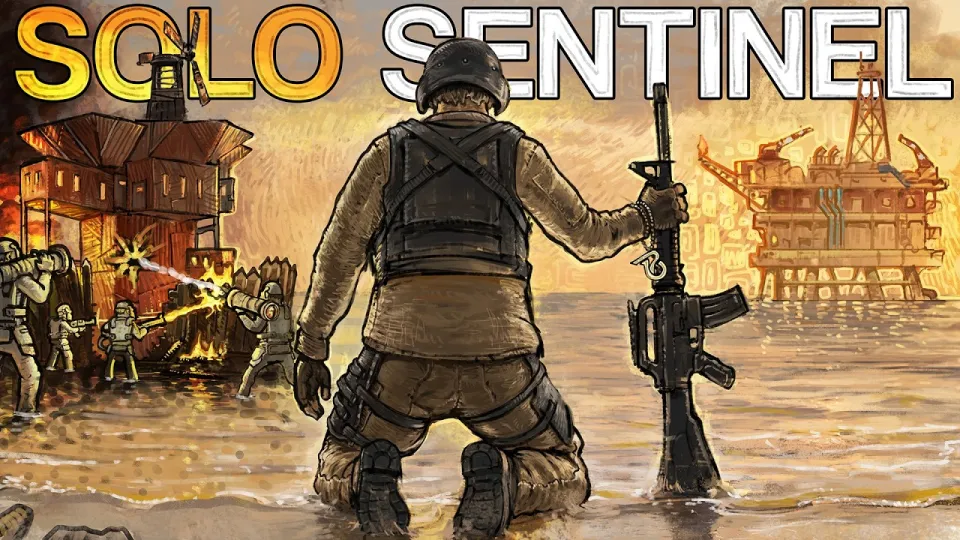
Video: The Solo Sentinel - Rust
Need articles like this for your video? They help promote it on YouTube and Google — order them in the Telegram bot @sat_sit_bot. Articles with your video embedded are written and posted by the bot itself — on popular topical sites (no ads). Try it free: 50 articles on us.
· based on the channel Blooprint
Key takeaways
- Blooprint's solo run is built around a base placed directly next to Oil Rig, one of the most contested monuments in Rust.
- The run starts on a fresh wipe and snowballs from primitive gear toward a full base with turrets and upgraded doors.
- A group of three players is seen approaching Oil Rig late at night, one of the recurring threats of a rig-side base.
- The base comes under a rocket raid from a neighboring player, which becomes the video's main defense sequence.
- Solo play is the format most requested by Blooprint's audience, who value the play-by-play commentary over team comms.
Rust rewards players who pick ground others avoid, and the simplest answer to how a solo survives a wipe is to build next to a high-value monument and make the trip back from it as short as possible. In Blooprint's solo run, that monument is Oil Rig: a base placed right beside the water route to the rig turns every crate run into a two-minute round trip instead of a ten-minute trek across the map. You can follow the creator's live sessions and see the same playstyle in real time on his Twitch channel.
The result is a run that starts from nothing on wipe day, snowballs through rig loot, and ends with the base under a rocket raid from a neighboring player.
Why a solo base next to Oil Rig works
Oil Rig is one of the richest monuments in Rust, and its loot is gated less by combat skill than by logistics. A solo who lives on the shore nearby can hit the rig repeatedly, bank crates fast, and never risk a long, exposed run home with a full inventory.
The trade-off is that the same shoreline attracts every other group on the server. A rig-side base is visible, reachable by boat, and close to a monument that players routinely scout. Building there means accepting constant traffic and designing around it:
- Keep the loot room away from the exterior wall that faces the water.
- Use a compact footprint so the base is cheap to seal and quick to upgrade.
- Place turrets to cover the water approach, not the front door.
- Store rig loot in small, separate stashes so a single breach does not end the wipe.
- Rebuild exterior defenses after every fight, because a rig-side base is never ignored for long.
What the solo snowball looks like from wipe day
A solo snowball in Rust is the process of converting a cheap early kit into better gear before anyone else on the server has stabilized. The run follows the standard curve: primitive tools and a small starter base, then a first successful monument run, then a weapon that lets the player contest other players instead of avoiding them.
The comments around the video point to a specific detail that matters here: the moment the player crafts a code lock is treated as a milestone, not a formality. For a solo, the first code lock is the point where the base becomes a real home rather than a stash box, and it usually arrives within the first hour of a wipe. From there the priorities shift to metal doors, a workbench upgrade, and enough components to keep the rig runs going.
The other side of the snowball is noise. Every successful rig run adds loot that has to be protected, and a solo who keeps pulling crates will eventually attract the group that wants those crates. The video's later half is essentially the bill for the early success.
The 3:30 AM problem: groups at the monument
Late-night Rust is not quiet Rust. One of the most discussed moments in the run is a group of three players heading to Oil Rig at around 3:30 in the morning, which is exactly the kind of traffic a rig-side base has to expect.
For a solo, the correct response to a group at the monument is rarely a direct fight. Practical options include:
- Waiting for the group to commit to the rig interior, where sound and sightlines work against them.
- Farming the shoreline crates the group ignores while they are inside.
- Using the base's turrets as a deterrent rather than chasing kills.
- Logging off with loot stashed instead of defending a base that is not under threat yet.
The humor in the video comes from the same behavior on both sides: the solo is also awake at 3:30 AM, upgrading walls and placing turrets while questioning what everyone else is doing up at that hour.
Base defense against a rocket raid
The centerpiece of the run is a rocket raid launched by another player on the server, which turns the base into a live defense scenario. Rockets are expensive, so a raid of this kind signals that the attacker considers the base worth the investment, usually because it has been visibly active and visibly profitable.
Solo base defense against explosives comes down to a few principles:
- Spread value. Do not keep every kit, every weapon and all sulfur in one room.
- Honeycomb the side that faces the most likely approach, which for a rig-side base is the water.
- Keep a defense kit in a secondary stash so you can re-gear after dying once.
- Use turrets to force the attacker to spend extra rockets on angles they did not plan for.
- Repair between waves; a wall at half health is a wall the next rocket removes.
The outcome is less important than the shape of the fight: a solo who makes a raid cost more than the loot is worth has already won the exchange, even if the base eventually falls.
Questions solo players ask about this playstyle
Solo Rust is popular because it produces a narrative that team play cannot: one player, one base, one continuous chain of decisions. Viewers consistently ask for more solo content and describe why it works for them. Without team comms, every call is explained out loud, so the reasoning behind a rotation, a fight or a base upgrade is visible instead of buried in voice chat. That makes solo videos easier to learn from, especially for players who do not yet know why experienced players do what they do.
The other recurring theme is variety. Requests for cave bases, unusual build spots and self-imposed challenges appear constantly, because the standard progression to tier two and tier three gear within twenty minutes has become predictable. A rig-side base is one answer to that: it is a known strategy executed under maximum pressure.
Where to find Blooprint's channels and links
All of the creator's platforms are listed here for convenience:
- Twitch: https://www.twitch.tv/blooprint
- Kick: https://kick.com/blooprint
- TikTok: https://www.tiktok.com/@blooprintgames
- Twitter: https://twitter.com/blooprintgames
- Discord: https://discord.gg/blooprint
Conclusion
A solo base next to Oil Rig is a bet that short logistics beat safe geography, and this run shows both sides of that bet: fast rig loot and a strong early snowball, followed by late-night traffic and a rocket raid that tests the build. The defense is the part worth studying, because it shows how a single player uses turret placement, honeycomb and spread loot to make an attack expensive. Blooprint's breakdown of the run is the best way to see the full sequence, and his Twitch stream is where the same solo approach plays out live.
Questions & answers
Is it viable to build a solo base right next to Oil Rig in Rust?
Yes, but only if you accept constant traffic. The advantage is a very short trip between your loot room and the rig, which lets you bank crates repeatedly. The cost is visibility: boats, other solos and groups will pass your base regularly, so turrets facing the water and spread loot storage are close to mandatory.
How does a solo defend a base against a rocket raid?
Make the raid cost more than the loot is worth. Honeycomb the likely approach side, keep a spare defense kit in a secondary stash, place turrets on angles the attacker has not scouted, and repair walls between waves. Even if the base falls, a raid that consumes dozens of rockets for little loot is a loss for the attacker.
Why do viewers prefer solo Rust content over group videos?
Solo videos explain the decision-making out loud. Without team comms, the creator narrates rotations, fights and base upgrades directly to the audience, which makes the video easier to learn from. Group content tends to hide that reasoning inside voice chat, and the standard fast progression to high-tier gear feels less varied.
What should a solo player prioritize on wipe day?
Get a small base down and a code lock crafted as early as possible, then convert the first successful monument run into better doors and a workbench upgrade. Oil Rig is a strong target because the loot is dense, but only attempt it once you have somewhere safe to store the results.
Source: The Solo Sentinel - Rust · Markdown version